The AI trend’s weakest links: neoclouds
Perhaps the most interesting outcome of the data center construction boom is a new type of company: “neocloud” companies, or. The business model is remarkably simple. Using massive leverage, financed predominantly by debt, they purchase GPU computing capacity and lease it out for AI computing. The hardware fleet consisting of the purchased chips serves as the collateral for the loan, and the customer base is typically limited to just 2–3 large corporations. It is not uncommon for the source of the loan used to purchase the chips and the lessee of the computing capacity to be the same hyperscale company, which simply wants to move the less attractive hardware fleet off its balance sheet.
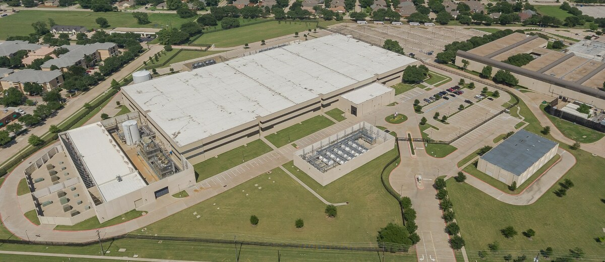
Source: https://www.prnewswire.com/news-releases/coreweave-opens-new-texas-data-center-to-expand-access-to-high-performance-gpus-301884897.html
It is important to distinguish these neocloud companies from hyperscalers, which also have large cloud capacities. Amazon, Google, Microsoft, and Meta rely on stable, cash-generating businesses and can afford to finance their investments largely from their own cash flow. New-generation cloud providers do not have such reserves. 100% of their revenue comes from GPU rentals, while nearly 100% of their expenses stem from GPU purchases and data center construction.
The flagship of this category is CoreWeave, whose Q1 2026 figures clearly illustrate this dynamic. $99 billion in contract backlog, $25 billion in debt, $740 million in quarterly losses, and $536 million in quarterly interest expenses (more than double the amount from a year earlier). Quarterly capital expenditures ($7.7 billion) are 3.7 times quarterly revenue.
Behind this simple business model lie several less obvious assumptions. For these companies to be profitable, AI computing capacity must remain scarce for years to come. This is an existential issue for them, as their pricing power is entirely based on the current capacity shortage; if this dynamic changes for the worse, debt service could quickly become unsustainable.
Rapid hardware innovation carries significant risk. As newer generations of chips bring about dramatic increases in efficiency and capacity, existing hardware fleets depreciate rapidly. Since this very hardware serves as collateral for the debt, the accelerating depreciation doubly undermines the new cloud providers’ balance sheets. The value of the collateral decreases, and the leaseability of the older fleet also deteriorates.
If the momentum of the AI trend ever slows, it will be worth keeping a close eye on this segment. Signs of stress may first appear here.
Return Download
This is a marketing communication. Making a well-informed investment decision requires obtaining detailed information. Please read the Key Information Document, the official prospectus, and the management regulations available at the distribution points of the Fund and on the website of the Fund Manager (www.vigam.hu) for detailed information regarding the Fund’s investment policy, distribution costs, and the possible risks of investing. Costs related to the distribution of the investment fund (purchase, holding, sale) can be found in the Fund’s management regulations and at the distribution points. Past performance is not a reliable indicator of future returns. Future returns from the investment may be subject to taxation, and tax and duty information relating to individual financial instruments and transactions can only be accurately assessed based on the individual circumstances of each investor, which may change in the future. It is the investor’s responsibility to obtain information regarding tax obligations.
The data contained in this information material are provided for informational purposes only and do not constitute investment advice, an offer, or investment consulting. VIG Investment Fund Management Hungary Ltd. accepts no liability for investment decisions made based on this information or for their consequences. The license number of the Fund Manager for alternative investment fund management (AIFM) is: H-EN-III-6/2015. The license number of the Fund Manager for UCITS fund management (collective portfolio management) is: H-EN-III-101/2016.