The high cost of data centers: is our environment at risk?

The Nasdaq Composite Index, one of the leading benchmarks for technology stocks, has experienced considerable volatility in recent years, but has followed an overall strong upward trajectory, driven primarily by the artificial intelligence (AI) boom and the rapid growth of major technology companies. At the same time, investors are becoming increasingly demanding when assessing the expected returns on AI-related investments, particularly as numerous investment funds hold AI-related assets. Given the sector’s rapid expansion, building data centers may currently appear to be an especially attractive business opportunity. However, their enormous electricity and cooling water requirements could pose significant sustainability risks in the future.
Google’s case in Finland
Technology giants such as Google have also entered the data center construction market. While this may seem like a natural development, media reports suggest that the company made a serious mistake: more than 250,000 trees were allegedly cut down illegally!
Finland has attracted considerable interest from technology companies planning to build data centers. The country offers a relatively stable geopolitical and geological environment, while its cool climate provides a major advantage by significantly reducing cooling costs.
There are currently plans to build 145 data centers across the country. One of these projects was launched near the town of Muhos in northern Finland by Alphabet, Google’s parent company and one of the world’s leading technology corporations.
According to environmental campaigners, the company may have cut down approximately 350,000 trees across two sites covering several hundred hectares without first conducting the necessary environmental impact assessments. The incident sparked widespread public outrage, with residents expressing concerns about the destruction of their natural environment and the potential rise in energy prices.
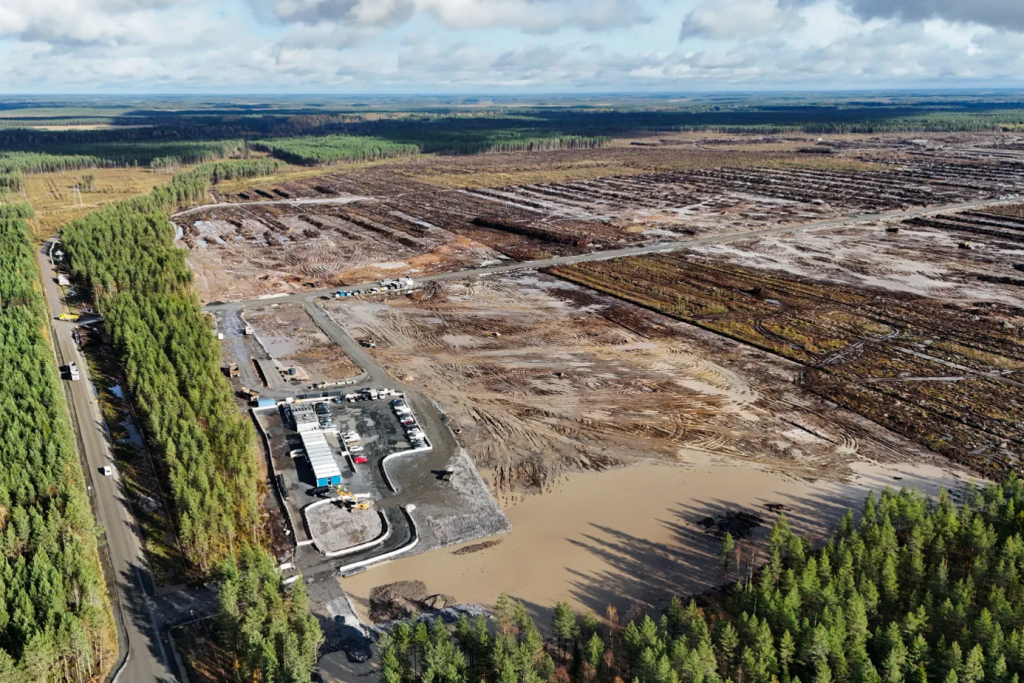
Source: Alessandro Bonifazio / AFP
This brings us directly to ESG considerations (Environmental, Social and Governance), as an incident of this nature can create challenges for both Alphabet and Google on several fronts.
From an Environmental (E) perspective, the issue is straightforward: the company’s activities allegedly caused substantial environmental damage. The Social (S) dimension concerns the company’s relationship with local communities, as the incident triggered strong negative reactions among Finnish residents and, more broadly, among people internationally. Finally, from a Governance (G) perspective, questions have arisen as to whether the company fully complied with and respected local laws and regulations. This case demonstrates how both seemingly minor and major corporate decisions can have significant ESG implications, potentially influencing how investors perceive and evaluate a company.
Thinking beyond earth: data centers in space
As we have seen, while the construction of data centers is both justified and necessary, it can place a considerable burden on Earth’s finite energy resources and natural environment. With these challenges in mind, SpaceX, the privately held aerospace and space transportation company founded by Elon Musk, announced in the summer of 2026 that it planned to build a 93,000-square-meter factory in Bastrop, Texas, to support the future deployment of data centers in space. According to Musk’s plans, the facility would be capable of producing as many as 6,000 satellites per year, which would subsequently be launched into orbit to help achieve the company’s objectives. Whether this ambitious concept will prove technically feasible and economically efficient remains to be seen. Nevertheless, even if it does not provide a complete solution, it could represent a meaningful step toward reducing the environmental impact of data infrastructure on our planet.
ESG Funds in an investment portfolio
This raises an important question: considering environmental and regulatory concerns, should sustainability-conscious investors avoid the technology sector altogether? The answer is a resounding no! The primary objective of ESG investing is not necessarily to blacklist entire sectors, although VIG Asset Management does exclude certain industries as part of its ESG investment approach. Instead, the focus is on encouraging responsible corporate behaviour and identifying and managing potential risks.
At VIG Asset Management, we refrain from investing in companies whose activities are considered harmful under international standards. These considerations are carefully assessed across all our investment funds*. Ultimately, the key to sound investment decisions may lie in building a well-considered, diversified portfolio that balances financial opportunities with sustainability-related risks.
* Further detailed information on the management of sustainability risks, the international standards applied, and the exclusion principles can be found in the official documents of the respective investment funds (Fund Management Policy, Key Information Document – KID), as well as in the sustainability disclosures published on the website of VIG Asset Management Hungary (www.vigam.hu).
Jogi nyilatkozat: A blog üzemeltetője a VIG Befektetési Alapkezelő Magyarország Zrt., a szerzői az Alapkezelő munkavállalói. A weboldal kereskedelmi kommunikációt tartalmaz. A blogon megjelenő cikkek magánszemélyek szubjektív véleményét tükrözik, tájékoztatási céllal készülnek és nem minősülnek befektetési elemzésnek vagy befektetési tanácsadásnak és nem tartalmaznak befektetési ajánlást. A blog szerzői saját nevükben kereskedhetnek olyan pénzügyi és pénzeszközzel vagy más termékkel, amelyről az általuk készített cikk közöl tájékoztatást vagy véleményt. Bár a szerzők tőzsdei vagy tőzsdén kívüli kereskedés során szerzett tapasztalata a jelen blogon szereplő írásaikban is megjelenhet, de érdekeltség nem befolyásolhatja az általuk közölt tájékoztatást. A blogon megjelenő cikkekben, hírekben és tájékoztatásokban megjelenhetnek olyan társaságok, amelyek üzleti kapcsolatot tartanak fenn a VIG Befektetési Alapkezelő Magyarország Zrt.-vel vagy a blog szerzőivel akár közvetlenül, akár a VIG Group cégcsoportba tartozó más vállalkozáson keresztül. Jelen blogon megjelent cikkek nem tartalmaznak teljes körű tájékoztatást, és nem helyettesítik a befektetés megfelelőségének vizsgálatát, amelyet csak az adott befektető egyedi körülményeinek értékelésével lehet megállapítani. A megalapozott befektetési döntés meghozatalához kérjük, hogy részletesen és több forrásból tájékozódjon!
A VIG Befektetési Alapkezelő Magyarország Zrt., a blog szerkesztői és szerzői nem vállalnak felelősséget a blogon szereplő tartalom naprakészségéért, esetleges hiányosságaiért vagy pontatlanságaiért, valamint a blogcikkek alapján hozott befektetési döntésekért és a befektetési döntésekből származó bármilyen közvetlen vagy közvetett kárért vagy költségért.